Thursday, July 21, 2016

Madison Avenue - The Town of Lenox

(Remember, with this blog, if you have any old pictures or stories you'd be willing to share of the street or block mentioned, please let me know!)

* * * * * * * *

Writers of blogs follow specific creeds, one of which includes momentum. And I’ve had to remind myself that with the Madison Avenue part of this blog, I will at times be slowed by the gathering of information. That’s a big problem for me, for I like to work at a certain speed but I am information-obsessed. The historical novelist in me has a hard time putting pen to paper, or fingers to keys, until I’ve gathered ALL the information I can because there’s always that one elusive, unknown fact sitting out there somewhere that could completely alter my perspective and change the entire course of my narrative. But! I have to strike a healthy balance between fact and speed with this blog and as I take you on this stroll down Madison, because it’s impossible to uncover every single historical fact within the confines of a self-imposed bi-weekly deadline.

Imagine walking with me down the street. I’m pointing out this neighborhood, what used to be here, when this house was built, and I stop. “Excuse me for an hour or a day, I have to check on some facts to fill in more details. Stay right here.” Why would anyone want to participate in the stroll with so many fits and starts? Therefore, in the interest of that thing called momentum, I will present the information that I have so far. I can always fill in more details later as I uncover more later. 

So you Memphis historical purists out there and those with the Memphis-history DNA, bear with me. You may be inclined to say “Yes he got the facts on the property correct, but he missed this other part of the story.” That’s going happen. Remember I have less than a year here to your lifetimes of knowledge. That is also why I will asking for your help here and there. Because part of my job will be to collect as many of your stories as I can and eventually incorporate them into what I hope this Madison thing will become. I may be starting the sketches in black and white, but you all will sometimes be supplying the crayons and will be coloring in the details - details that in some cases, no one knows but you.

And remember, I'm staying as close to Madison as possible. That’s also why I’m sticking to specific blocks. 

Ok, I’ve previewed the movie long enough, it’s time for the main feature. Time to put on those walking shoes and stroll down the avenue, in the present and back in time, to what Madison is and what it once was. 


Welcome to the Town of Lenox

Stand on the corner of East Parkway and Madison Avenue, and take a look around. 

E. Parkway and Madison, June 2016

Now turn back your clocks to any time between 1890 and 1909. And guess what? You’re not in Memphis. You’re standing on the eastern edge of Lenox, Tennessee, a little town of less than a square mile, somewhere around 230 acres (that’s an area smaller than all of Overton Park). 

If the Lenox name sounds familiar, you might be thinking of the old Lenox neighborhood south of Union, the Lenox Bayou that is part of the Overton Park soil, or the old Lenox School - now the Lenox Condominiums - on S. Edgewood at the corner of little Tunis Avenue. They all have origins in the town of Lenox. 


The borders of Lenox, after annexation:
Poplar to the north, Central south,
Trezevant (E Pkwy) east, Cooper to the west
courtesy Memphis Public Library

Flashback to a specific year, 1890, and if you’re still standing at what will later become East Parkway, you’re actually standing at a road called Trezevant (for the neighboring area of Trezevant), and to your west is the still unincorporated greater Lenox Subdivision of old forest, hardwoods, oak trees, brush, and a few new houses around dirt roads. The land had recently been opened up and parceled for development by the Equitable Land and Construction Company. The subdivision’s western border is at Cooper - it was still Cooper Avenue then - its northern edge is up at Poplar at the yet-to-be-completed Overton Park, and its southern edge runs down along Central Avenue.

This is Overton Park, but Trezevant Ave in Lenox may have 
looked like this in the 1890's.
Dogwood Drive, Overton Park, 1907
courtesy Historic Memphis


A photo around 1910, a section of now East Parkway
south of Poplar Avenue. Caption on back of photo reads,
"Parkway South of Poplar Avenue." c. 1910
courtesy of Digital Memphis, Memphis and Shelby County Room,
Memphis Public Library

Think about this as you stand at that Trezevant corner in 1890: Madison hasn’t been extended this far yet - it ends at Cooper. The land around you has only just been parceled and has yet to be fully developed. Almost four long miles away, Memphis - rebounding from the yellow fever epidemics, the population exodus of the 1870's and a repealed city charter - is busy addressing issues of sanitation, street-paving, and crime, and is still lobbying the Tennessee State Legislature to restore its charter to become a city again. Memphis the taxing-district stops at Dunlap Street, at what is now the Medical District. 

So in effect you are way out in the country. If you climbed to the top of one of those oak trees and took a look around, within your view to the west the land would be staked out to people with names like Gordon, Davidson, Wilson, Collier, and Ammonett, later to be parceled or sold to the Simmons, Hastings, Richardsons, Treadwells, and Millers. Many of the homes built so far (c. 1890) are south of Union and house a little less than 200 residents. The essentials of water mains and luxuries like sewers are in the works. To get your goods and services, you walk down the road to the few family businesses up and down Cooper.

Williamson Map 1891. The curve in the center is the corner of Cooper and Madison, at
what is now Overton Square; the red line through Cooper represents the “new” Memphis city limit. Courtesy Shelby County Archives

Directly to your west is the Idlewild neighborhood, which will become an incorporated city in a few years, and after that the already-incorporated town of Madison Heights. 

Remember, there are no paved roads yet - although some will be filled with gravel in the next fifteen years - and automobiles of course are quite a ways off. So the growth of your neighborhood has been made possible in part by the building of the streetcar line of the East End Railway Company. It was known as the East End “dummy line,” and its horse-drawn street cars (after 1891 they’d be steam and electric cable-powered trolleys) provided transportation into areas east, making its way along Madison Avenue, all the way from Memphis proper. 

Courtesy Memphis Railroad and Trolley Museum and
Memphis Public Library

Since your subdivision has not extended Madison yet, after their trips east those same street cars make a right turn at Cooper and head south all the way down to Young Avenue, where they turn left and again head east, ending at Trezevant, dropping passengers off near the grandstand of the horse racetrack of Montgomery Park at the New Memphis Jockey Club (where the Fair Grounds are now).

1916 postcard of Montgomery Park
George Whitworth Collection, Historic Memphis

To the south nearest Central, the J.W. Dickson Lumber Company has a saw mill east of Cooper down near the rails of the Nashville-Chattanooga & St. Louis Railroad, and there's The Dixie Match Factory right next door to the west, on Gaylord Ave. 

A screen-shot of a page of the Sanborn maps, a mother-lode-like
resource for historians and researchers. Sanborn published these maps

for fire insurance purposes. And these maps, produced every few years 
after the 1860s, had to be extremely detailed. The capture above shows the 
Dixie Match factory and the J.W. Dickson lumber yard at the end of
Gaylord, right off the railroad tracks that cross the trestle over
Cooper, just north of Central. The "D" designation on the structures
to the left, along Cox, denote dwellings. The house you live in
today might be one of them!
Courtesy Memphis Public Library


And your little subdivision also has its own railroad passenger depot, the Lenox station, down on Cooper and just north of Central. And from there you can take the L&N (Louisiana & Nashville) train all the way to Nashville. 

Old Press-Scimitar clipping, March 22, 1961
courtesy Memphis Public Library

A soon to be historic park (Overton) to the north, rails and factories to the south, businesses and a streetcar line along Cooper, and a club and horse racing to the southeast adds up to some wealth within your 230-acre subdivision. So much so that in 1896 you have enough wealth to begin planning a school, and enough resources and organization to incorporate into a city. 

Some accounts say that your town was named for a local soap company called Lenox, which built a sign y’all needed. But “standard” accounts say that it may have been named quite simply for your surrounding forests, a contraction derived from “Eleven Oaks.” You’ve appointed a gentleman named A.W. Marchildon as your first mayor. He (maybe, according to city records) lives down near Cooper and Union. 

Commercial Appeal clipping, 1950
Courtesy of Memphis Public Library

Into the years between 1904 to 1909, with the exceptions of fire and police departments, your little town is largely self-sufficient. The building of those water mains and sewers is complete - you residents are required to make the necessary connections to them, and soon - along with electric lights and telephones, and many of you and your neighbors are wealthy enough to have pulled together bond moneys for the building of a school. Paved roads, more business, more carriage traffic and more people arriving by streetcar, followed. 

Meanwhile, starting in 1899 Memphis had begun expanding its borders, annexing Idlewild and Madison Heights, pushing its city limits east and all the way to Cooper. Potential Lenox annexation by the city of Memphis had been discussed as well (sound familiar?). R.J. Rawlings, your second mayor, would be part of the efforts to help fight off or delay annexation. 

(Annexation, still on our minds today. The prevailing thoughts - or fears - on it in the early 20th Century was that it was necessary to stop the spread of disease, to ensure that sewer systems could be built in those outlying areas that did not have the resources to build such infrastructure. Lenox did not have those concerns, having the means to build their own sewer systems.)

Your last mayor, William Neville Page, worked with those linotype printing machines for your Commercial Appeal newspaper and he (may have) lived somewhere down along Cooper near where Courtland Place ends, a couple blocks south of Union. Under his leadership your town successfully completed those water main and sewer connections, installed fire hydrants, and completed the building of your two-story Lenox School - the first fire-proof schoolhouse in Memphis - down on S. Edgewood. 

Cover of Page/Lenox Collection, W.N. Page pictured,
Lenox School bottom right,
courtesy of Digital Memphis, Memphis Public Library

But all of that would not be enough to fight off the inevitable annexation by the City of Memphis as it moved eastward. Against the wishes of many of you Lenox residents, in 1909 the Tennessee State Legislature approved annexation. Memphis would agree to eventually pay off the $50,000 in bonds that were needed to build your school, and the annexation expanded Memphis’ footprint to Trezevant Street at your town’s eastern edge. 

Now that Memphis’ city limits extended into Lenox, the 1910s and the “dummy line” now-electric streetcar (we can call them trolleys now) and new gas-powered machines called horseless carriages brought more people and more wealth into this idyllic woodsy area at the edge of the city. Between 1910 and 1925, in a trend that occurred in industrial cities all over the country, hundreds of new houses and businesses would crop up in the “streetcar suburb” neighborhoods around a Madison Avenue that now extends all the way to what would be soon become East Parkway. 

During this period Memphis’ cotton and lumber businesses were booming. Bankers, lawyers, physicians, tradesman, carpenters and anyone with two hands and a few mouths to feed came from all over the country into Memphis. Even Canadians made the trek down into the Mid-South. And many would move right into the undeveloped land that was now owned by Cole's Manufacturing Co. - one of the largest lumber manufacturers in the region. Dubbed Cole’s East End Subdivision, families would begin purchasing single or sometimes multiple plots of land on which to build their multi-family houses and mansions. 

Cole’s East End Subdivision parcel map, c. 1902.
Lenox Ave is now Edgewood, Springdale is now Cox, Madison is now an avenue.
Courtesy of Shelby County Archives


Subdivision plot numbers 85 and 86, on the north side of Madison at the Lenox (now Edgewood) corner, would be purchased by an attorney, a Mr. Caruthers Ewing. In extending the postal numbering system that started downtown, at Front Street at zero, plots 85 and 86 would become 2282 Madison. 

The 32 to 36 subdivisions on the south side of Madison, between Cox and Edgewood, would be purchased. They’d become the houses we now see from 2219 through 2271 Madison. 

And the east-side plot of subdivision 40, on the north side of Madison, would be purchased by a blacksmith from Canada, a Mr. L.J. Turcott, and he would build a house on 2234 Madison Avenue. 


Next time, we explore the 2200 blocks, featuring 2282 and 2234 Madison Avenue.


(And I promise not to make y’all wait four weeks for the next entry)


Special thanks on this post to Wayne Dowdy, Memphis Public Library, for use of the Memphis Room, Frank Stewart at the Shelby County Archives, and Joe Lowry for helping with some finer details and footnotes.

Thursday, June 23, 2016

Madison Is Memphis


“You can observe a lot by just watching,” Yogi Berra once said. And as I’ve learned Memphis I’ve spent a lot of time driving up and down the streets, east and west on the avenues, from Collierville to the river. Being a Midtowner I’ve spend most of my time west of Highland, along Walnut Grove or Central Avenue - avoiding congested Poplar Ave wherever possible - up and down Belvedere and McLean and Cooper here in Midtown, and out and back along Madison for trips to either the environs around Overton Square or for trips Downtown. 

Madison at Claybrook St.


Y'all already know that Madison Avenue became one of my favorites. As observations go, it started with just a feeling. A sense both of what Madison is and what it was. Trip after trip I began to realize, in no particular order:
That it is far less congested than Poplar or Union. 
For just over half it’s length, there are the remaining trolley tracks and supporting cables over the street (a note on the trolleys later)
There are dozens of older, charming, one- and two-story commercial structures up and down the avenue. 
Bars Restaurants Tattoo parlors Second-hand stores Record stores Recording studios Music venues.
It has Overton Square, the original Huey’s, the Gilmore Building and Fino’s.
It passes Marshall Ave, which leads straight to Sun Studios.

And it has the most elegant and dramatic westbound entrance to Downtown. Past Marshall, over a curve and a weave in the road above Danny Thomas Blvd, and then down a gradual approach through brick buildings, toward the light towers of Autozone Park and into the modest Memphis skyline.

The Madison approach into Downtown

I’ve learned that much of Madison remains intact, with a few notable exceptions, like parts of the Medical District, old Russwood (baseball) Park, the interruption of the 240 overpass, the Cash Saver parking lot and the plot of land that was once home to good ol’ Anderton’s Restaurant. But over the length of its four-plus miles it has generally not been paved over, commercialized, demolished, or swept aside in favor of fast food drive-thru’s or chain drug stores, like what has happened on Union Avenue. 

I’ve shared these observations with a few people. I’ve learned that efforts like this have been started before, specific to Madison. More recently, when I’ve spoken of Madison to people in the know, Madison home-owners and business owners and life-long preservationists, I’ve gotten the ah-ha’s and the yes’s and “I’ve got some stories!” Their eyes light up. 

And then I sometimes get this: “So are you an historian, an architect, in city planning…?” 

Nope I’m not. And by starting this Madison Avenue project I created quite a task for myself. What was conceived of as just a photo essay has turned into what it’s turned into: a daunting no-deadlines endeavor to piggy-back on what others have done to continue to document and preserve this iconic Avenue, and tell some of its stories along the way. So no, I’m not an historian, in the sense that I don’t have a degree in history. I’m not on any government boards or commissions, I’m not a city planner, and I’m no architect. (This is actually a good thing for this project, since I’m not tied to any agency nor private firm with any agendas or biased interests.) 

However, growing up everyone told me I was going to be either an architect or a city planner or both one day (insert George Constanza jokes, here), because one of my main hobbies as a kid was drawing and sketching and building anything and everything related to cities: detailed buildings and cityscapes and maps and views-from-above. I was obsessed with cities.

So was the late great Jane Jacobs. And I’m not suggesting that I can stand toe to toe with Ms. Jacobs - if I can come anywhere close to what she accomplished I’d be declared a saint here in Memphis - but she is most definitely the perfect role model in my efforts. Like me Ms. Jacobs was not a city planner. She did not hold a degree in history. 

Ms. Jacobs was a writer and an editor. And she was passionate about the city she wrote most about, her Manhattan neighborhood in the 1940’s, 50’s and 60’s. Among her greatest strengths were both her love for her neighborhood and her powers of observation. 

In those aspects her and I have a lot in common. 

But Ms. Jacobs saw what city planners of the late 40’s and early 50’s could not see in their studies. Cities in those days were perceived as overcrowded and dirty and industrial, not for raising families. And while leaders and planners, back by heaps of federal dollars, were focused on the highway system and the movement of people and their automobiles out of or around cities and out to the suburbs, from her window or stoop Ms. Jacobs observations told her that so-called super blocks and vast plazas don’t work, that highways destroy neighborhoods, that parking lots and sprawl are wastelands for pedestrians. But that the neighborhood, the intimate city-scape, does work.

Overton Square, looking west at Cooper

So do city streets belong to cars or people? Let’s think about this in the simplest of terms. The most successful streets and neighborhoods have a healthy mix of both. Here in Memphis think of Overton Square, Cooper-Young and South Main. What makes these high-density neighborhoods vibrant and attractive? Just-enough street parking or occasional parking garage and lots of walkability. Shops, restaurants, clubs, and services within residential walking distance, and with their proximity to the street, highly-visible. These areas are more conducive to mass transit, or Uber, because of simple pick-ups and drop-offs. More foot traffic and people crossing streets means vehicles must move slower through these areas, which reduces the frequency and degree of collisions. Lastly, more people and more activity at all hours of the day serves as a deterrent to crime. 

This healthy mix is the key idea of new urbanism, which is why what’s left of Madison needs to be preserved. Blocks of it are still walkable. Ma-and-pops still exist in those one- and two-story early-century commercial buildings. Residential neighborhoods still congregate around it. What’s left of our old trolley system is still there. What’s left of old Memphis is still there. To again borrow the phrase “Midtown is Memphis” - Madison is Memphis.

So, Here we go!

As I mentioned in my previous post, my journey will begin at East Parkway and move west to Downtown and Front Street. But why that way? Why east to west? Doesn’t Madison begin at Front Street? 


It does. In fact there’s a marker at Front Street that designates Madison and Front as a kind of starting point, from zero, of Memphis to all points beyond. And Memphis legend and storyteller and historian Mr. Jimmy Ogle himself told me, just Tuesday, that “Madison starts here! It starts at zee-roe!” He was quite adamant, and of course 100% correct. 


Something else I learned from the same Jimmy Ogle this past Tuesday, is the fact that Madison doesn’t even end at Parkway. Ugh! Argh! Damnit! The nice little bookends of my study are ruined! Truth is, as Jimmy explained, many people forget that Madison starts up again over Parkway, past Lindenwood Church, and weaves its way through a residential neighborhood before ending at the parking lot for the Lipscomb & Pitts Building in between the Poplar and Union Avenue viaducts.  

Thank you Jimmy, and I completely agree with you that Madison starts at Front, but I have my reasons in starting at Parkway. The first reason honors history - East Parkway (once named Trezevant Street) was for many years Memphis’ eastern city limits. The second is purely practical - the Memphis newbie here knows more about Madison in Midtown than he does yet of Downtown, where there’s a lot more history and much more research necessary. I’ve already started my Midtown research, have already loaded up my iPhone and iPhoto with Midtown-Madison pictures, and have interviews lined up with home and store owners in Midtown. And frankly, the people who would know Downtown-Madison of the 1920’s first-hand are buried somewhere in Elmwood Cemetery, whilst more of the Midtown been-there’s are still around for me to badger, and I need to talk to them and soon.


I also like to think of my Parkway start in a romantic sense. A stepping back in time if you will, starting with the more recent and still-accessible history in Midtown and making my way west, back in time, toward Downtown and back to the very beginnings of our city. 

In addition, there’s one other sympathetic notion of mine that wants to start at Parkway: a little-big something called Memphis Heritage. 

Memphis Heritage - memphisheritage.org - at 2282 Madison Ave in the Howard Hall mansion, is a non-profit organization dedicated in its efforts to preserving Memphis’ and Shelby County’s rich architectural history. It was founded in 1975 and it “continues to be the voice” for the preservation, improvement and reuse of the area’s “architecturally and historically significant buildings, neighborhoods and parks.” 

Today MH is under the guidance of executive director June West, who may be the latter-day Memphis version of Jane Jacobs. (And hey, separated by only one vowel) There are many in the city devoted to preservation, who donate, act, and/or provide or arrange funding to preserve significant structures here in Memphis. And there are many in the city who are virtual walking Memphis encyclopedias. But I think I’d get few arguments that when it comes to preservation June is Memphis' leading custodian. 

If you want to do more research of your own, you could start by searching the archives of the Memphis Daily News or the Commercial Appeal or the Memphis Flyer with key words like 'preservation,' 'heritage,' 'historic,' and so on.  Like this article from June 8, 2009, which is particularly noteworthy as it applies to my project. 


So it seems quite apropos to start my four-mile-long journey into Madison’s past, present and future with the very heartbeat of Memphis preservation, and 2282 Madison Avenue, Howard Hall.

Finally… Let the journey begin.


Next week’s post will spotlight Howard Hall and a hundred-year-old house two blocks in from East Parkway.

Friday, June 10, 2016

Vanishing Memphis - The Battle For The Street


I’m not talking about the murder rate. I’ll save that topic for another post. 

No, I’m talking about preserving Memphis’ unique urban heritage. I’m talking about saving Memphis from the ravages of developers and a quick buck. I’m talking the ever ongoing fight to save streets so unique to Memphis and Midtown, streets that need a little saving like South Main has been, streets like Cooper Street and Central Avenue. And Madison Avenue, from East Parkway all the way to Downtown at Front Street. 

It’s much more important than you might think.

“Madison is one of the last, walkable streets of its kind that we have left,” said June West of Memphis Heritage. 

“Madison really is old Memphis, and what Memphis was,” Willy Bearden told me. 

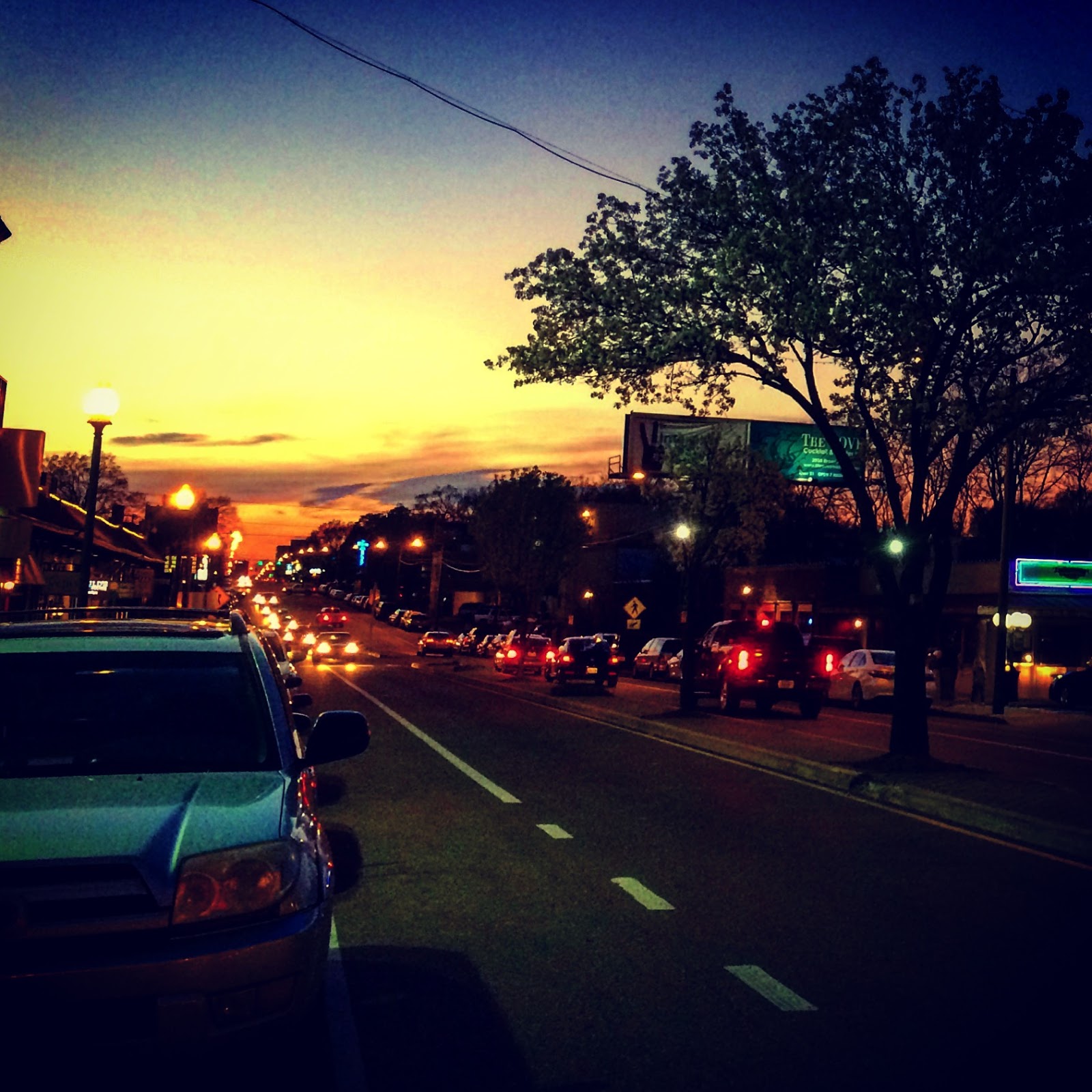
Sunset over Madison from Overton Square

With this post I hope to do something fairly ground-breaking. Or, ground-saving, really. And dauntingly ambitious. And I’m going to asking for your help. In the next few months I will be asking you all for your valuable memories and information about what is and once was here in Memphis, and specifically along Madison. I have many resources lined up already, but I’ll need your help as well. Keep reading and you’ll see why.

I’m going to introduce ya’ll to something called New Urbanism (some of you of this know already). Only a few decades old in its theory, New Urbanism is really quite old in terms of actual practice. I think it can be summed up in this wonderful, memorable passage from the late great Jane Jacobs, the urban activist who in the 1960’s helped save New York’s SoHo and Greenwich Village from being leveled for an expressway:

“Under the seeming disorder of the old city, wherever the old city is working successfully, is a marvelous order for maintaining the safety of the streets and the freedom of the city. It is a complex order. Its essence is intricacy of sidewalk use, bringing with it a constant succession of eyes. This order is all composed of movement and change, and although it is life, not art, we may fancifully call it the art form of the city and liken it to the dance … an intricate ballet in which the individual dancers and ensembles all have distinctive parts which miraculously reinforce each other and compose an orderly whole. The ballet of the good city sidewalk never repeats itself from place to place, and in any once place is always replete with new improvisations.”

Thriving cities and towns are walkable - think of traditional downtowns and town squares. Brings to mind easy weekend afternoons, small shops, the old soda fountain. Memphis on the other hand has often been cited as one of the least walkable cities in the U.S. There are a few wonderful exceptions - South Main, Cooper Street from Young to Union, Broad Avenue. And of course Madison.

What makes Madison so unique? What sums it up nicely is what Mr. Bearden and Ms. West said, that Madison is old Memphis, and that Madison is one of our last walkable streets.

And if you have a few 10 or 20 minutes, whether you’re new to Memphis or have lived here all your life, take this little driving tour through Midtown the next time you’re out on a random weekday or Saturday afternoon, and pay close attention to your surroundings: 

Start at Cooper-Young. Drive north on Cooper Street toward Central Avenue - casually, don’t mind that person behind you who seems annoyed - and look around. Look at the height and accessibility of the buildings. 


Southwest corner of Central and Cooper

Before the second railroad trestle, turn left on Central Avenue. 

The approach to Central Gardens, with beautiful oak trees
 lining the street, and old houses sitting atop green bluffs.
 

Now turn right onto Belvedere Boulevard. 

Belvedere Boulevard - notice that green median,
separating the oncoming traffic, of which there is almost none

Now at Peabody Avenue, turn left. More green bluffs, more trees over the street. Don’t drive too fast, this here’s a residential neighborhood. Depending on the time of day, there’s a few joggers, bicycles, baby strollers.

Go all the way to Cleveland Street and turn right. When you get to the light at Union - you’re going to go straight, no turning yet, and you’ll inevitably have to wait at the red light - think about the little pleasant drive you just had and take a look at your surroundings. 

There’s a gas station to your right, and a big block of concrete
and steel called Union Centre to your left, with a big LED screen
flashing advertisements to distract you while you wait.

Take Cleveland all the way to Madison Avenue, and get in the right-hand turn lane. 

Before you turn, notice the rails embedded in the street  
before you, and beautiful little 1348 Madison Ave.
There’s subtle signage on the windows for tattoos.

Now head east on Madison. 

Note the trolley cables above you, and drive along the few hundred feet of rails, for fun. As you drive along, pay attention to all the smaller businesses along the way. You’ll pass big brown Minglewood Hall on the right. And as you approach Avalon Street take a look at that giant parking lot on your left. Somewhere past all that asphalt and vehicular sprawl is a Cash Saver. Keep driving. 

Ah this is better. Clock-wise from top-left, the little gem
of an intersection at the corner of Belvedere.
The famous Bar-B-Q Shop, the iconic, and landmarked Gilmore Apartment  

building at McLean with Fino’s Italian Deli down in the corner.
  Before you reach the original Huey’s, the wide patch of green
where the old Anderton’s stood, a local restaurant favorite
for generations of Memphians.

Slow yourself down a bit and you’ll be arriving into the heart and entertainment hub of Midtown and Overton Square.

Middle to left, Babalu and the upstairs patio of Lafayette’s Music Room
Weeknights and weekends you'll find plenty of people walking, 
dining, laughing, crossing the street.


Keep straight, and go through Cooper Street.


Looking north from Madison, that open space behind the chain link fence -
that’s where the new, very pedestrian-friendly Memphis Ballet is being built.

You’re going to turn right on East Parkway up ahead, but before you get there, see if you can find the old mansion that is home to Memphis Heritage. It’s before Parkway, on your left past the small wall and fence along the sidewalk, that buff-colored structure amongst the oaks. 

Memphis Heritage

Now make your right onto Parkway. Stay right, because you’re going to turn right onto Union Avenue, and it happens upon you quickly. Stay to your right, being careful not to turn into little Monroe Avenue, and slowly, carefully, yieldingly merge onto Union heading west.

Hold onto your wheel and watch your mirrors. Despite all the thump-thumps of manhole covers, you might consider staying in the center lane. Why? Because every now and then cars in the left lane will try to turn left … without the advantage of a center median. And from the right lane you’ll have be on the lookout for cars bolting onto the roadway to your side from any number of fast food places, stores, or parking lots. You’ll probably hear your share of honking horns along the way, and you may be tempted to honk yours too sometime throughout this stretch. Oh, and don’t even think about turning left at any light - it’s against the law - see those no-left-turn signs? 

A lot of signage, hovering just off the street and over the sidewalks.
Sidewalks? Where are they?


Enough bare-knuckling. Let’s get off of Union. Whew! You can relax again.

I have been critical of Union Avenue, for it’s lack of unique place and for the proliferation of fast food chains and national brand name drug stores that line the avenue. In its present state, it’s an avenue that at first glance could be Any Commercial Avenue, USA

What I did not know, what I could not know a few months ago and so early in my Memphis discovery, was how glorious Union Avenue once was, and how it has been literally desecrated.

I did not yet know, for example, that the CVS drug store that now sits on the southwest corner of Cooper St and Union was once home to the Union Avenue Methodist Church, a beautiful building dating to 1912 on the National Registry of Historic Places, that was sold to CVS Pharmacies and bulldozed in 2011. In a sad lesson of How City Heritage Dies, its sale and eventual demolition was approved by the Memphis City Council at the time in a 10-2 vote. 

Southwest corner of Union and Cooper, August 2007. A CVS is now here.
Notice the irony in this image? 

There's been yet another collision on Union. (google image)

This is just one example of many. Now I find Union Avenue to be both exasperating and tragic, an example of what we hope does not happen to other Memphis streets. 

Cooper Street is still largely intact. It looks like it did in 1950. Same can be said for Central Avenue west of the Parkway. And with a few glaring exceptions, Madison can still boast many of the same historical, iconic structures that are common to early 20th century U.S. cities and to Memphis in particular. 

But they are in danger. 

Vulnerable to predators, at risk for demolition, one by one. What makes them so? It’s not termites or deterioration, although those do occur on occasion. No, they are at risk for a few primary reasons, including - for some, but not all - their lack of official status as city landmarks, outright neglect, ignorance, or the quick buck of a demolition-turned-parking-lot, and lastly due to the Catch-22 of economic growth and development, which often favors new construction over preservation. 

Whether it be from neglect, ignorance or growth, or simply any time a property owner wants or needs to sell, the immediate threat to these properties is very real. Witness a textbook example of an iconic, lonesome, century-old building Downtown on Poplar Avenue that was recently targeted by a business owner who wanted to buy it and tear it down for a parking lot. 

http://www.commercialappeal.com/business/Proposal-would-raze-101-year-old-building-for-parking-lot-378400871.html

From the Commercial Appeal

238 Poplar, the 100-year-old Gusmani Building, occupied by a bail-bondsman and a small law office, under threat for no other reason than the easy money that comes from paid parking. Yes that’s all we need - more parking in an area with an abundance of parking. (Why don’t we pave our parks for parking too while we’re at it - oops, that battle is unfortunately well under way.)

However June West, having her finger constantly on the pulse of City Planning, through Facebook and other outreach, encouraged we in the community to write to the city Land Use Control Board to strongly oppose the development. In addition, new Downtown Memphis Commission president J. Terence Patterson was quoted by the Commercial Appeal as saying that it is “important to retain the few urban buildings that remain along this (Poplar) corridor,” and that vast parking lots such as those found all along many Memphis streets are an “inhospitable environment for pedestrians.” 

The hearing had been planned for the very day of this writing, June 9, but through those efforts and Mr. Patterson’s opposition, or simply by coincidence, the developer requested to hold his application, for now. The case “may be heard (at the) July 14” hearing. Stay tuned.

Do we really need more of this in Memphis? (google image)

This is exactly the kind of structure by structure efforts that are needed to preserve the rest of the city’s iconic properties. That’s why the case of the Gusmani Building is so textbook. I don’t know the exact count, but there has got to be close to a hundred or more vulnerable buildings like this in the roughly 10-15 square miles of the metropolitan area within the borders of the river and the north-east-south parkways. 

Many buildings like these were long ago lost to fires, neglect, or demolition. Those architectural “marvels” called parking lots sit in place of many of them. Others were bulldozed in the 1960’s to pave the way for the I-240 that both cut through and accelerated the development of the Medical District and what is now The Edge, west of the 240 and between Poplar and Union. But many buildings remain on parts of Union near Sun Studios, and up and down Marshall Avenue around where the High Cotton Brewery is located. They are old warehouses, or what are called Standard Traditional, and One, Two, or Three Part Commercial buildings unique to the time.

And although at first glance these buildings may not seem landmark-worthy, consider this: They have historical and cultural significance here in Memphis, important as they relate to our musical heritage, and for signifying what makes Memphis Memphis. Once they are gone they cannot be replaced.

One of the most important first steps in this preservation is public awareness. That’s where this project, and your help, comes in. I’m only one person with zero funding - all my raising-awareness efforts are volunteered - but with your help and resources we can be many. 

What I want are your stories and any information you may have. As I make my way down Madison and document each property block by block, I would like to hear what you know about specific properties. Maybe your grandfather worked there. Maybe you spent your college years hanging out there. Maybe you bought flowers or candy or bummed cigarettes there. Maybe you had a first date there. 

I have resources that can cover the facts, but it will be your stories that can bring color to the black and white documentation. And together we can accumulate an entire grassroots history of Madison from E. Parkway to Front St. 

(To be clear, many buildings along Madison are already landmarked. Especially those Downtown, or apartment buildings like the Gilmore. But many structures east of B.B. King Blvd are not.)

Eventually I want to take this effort to other significant but not-landmarked Memphis streets, like Marshall or Monroe avenues - I might even name them as part of a “Memphis Music Madison Corridor,” or something like that. 

I am also wide open to suggestions and pointers and other resources. I am happily aware of Josh Whitehead’s excellent Memphis history blog http://cremedememph.blogspot.com , the West Tennessee Historical Society https://wths-tn.org and Memphis Heritage http://www.memphisheritage.org sites, and many others. But there may be other individuals or organizations in the middle of similar efforts. I don’t yet know what I don’t yet know.

Please, join me in this effort. And let’s get started!


Watch for my next post on the subject, in which I’ll start the journey by comparing the history and developments of Union versus Madison.